
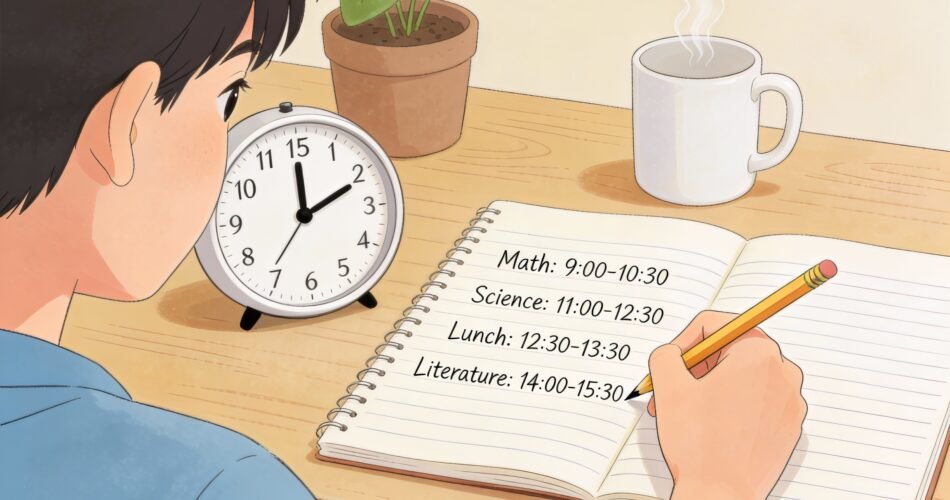
Time management is one of the most important skills every student needs. Whether you are in school, college, or university, managing your time well helps you study better, reduce stress, and achieve higher grades. Many students struggle not because they lack intelligence, but because they don’t use their time properly.
In this article, you’ll learn simple and practical time management tips that are easy to follow and effective in daily student life.
Why Time Management Is Important for Students
Good time management helps students:
-
Complete assignments on time
-
Prepare better for exams
-
Balance study and personal life
-
Reduce last-minute stress
-
Improve focus and productivity
When you control your time, you control your results.
1. Set Clear Goals
Start by setting clear and realistic goals. Know what you want to achieve daily, weekly, and monthly.
Example goals:
-
Finish math homework by 6 PM
-
Study one chapter of science today
-
Revise notes for 30 minutes daily
Clear goals give direction and prevent wasted time.
2. Create a Daily Study Schedule
A study schedule helps you stay organized and disciplined. Write down your classes, study time, breaks, and other activities.
Tips for a good schedule:
-
Study at the same time every day
-
Keep sessions short (30–50 minutes)
-
Add short breaks to avoid burnout
Stick to your schedule as much as possible.
3. Prioritize Important Tasks
Not all tasks are equally important. Learn to prioritize your work.
Use this order:
-
Urgent and important tasks
-
Important but not urgent tasks
-
Less important tasks
Finish high-priority work first to avoid pressure later.
4. Avoid Procrastination
Procrastination is the biggest enemy of time management. Delaying work only increases stress.
How to avoid procrastination:
-
Start with small tasks
-
Break big work into smaller steps
-
Set a timer and focus for 25 minutes
Starting is often the hardest part.
5. Limit Distractions
Mobile phones, social media, and notifications waste a lot of time.
Simple solutions:
-
Keep your phone away while studying
-
Turn off unnecessary notifications
-
Study in a quiet place
Focused study takes less time and gives better results.
6. Use To-Do Lists
A to-do list keeps your tasks clear and organized.
Benefits of a to-do list:
-
You don’t forget important work
-
You feel motivated when tasks are completed
-
You manage time more efficiently
Write your list at night or early in the morning.
7. Take Regular Breaks
Studying for long hours without breaks reduces concentration.
Best break method:
-
Study for 25–50 minutes
-
Take a 5–10 minute break
-
Stretch, walk, or drink water
Breaks refresh your mind and improve focus.
8. Learn to Say No
Students often waste time on unnecessary activities. Learn to say no when something affects your study time.
Focus on what truly matters for your future.
9. Get Enough Sleep
Good sleep is essential for time management. A tired mind works slowly and makes more mistakes.
Sleep tips for students:
-
Sleep 7–8 hours daily
-
Avoid mobile phones before bed
-
Sleep and wake up at the same time
A fresh mind saves time and improves learning.
10. Review and Improve Your Routine
At the end of each week, review your routine.
Ask yourself:
-
Did I use my time well?
-
What wasted my time?
-
What can I improve next week?
Small improvements make a big difference over time.
Common Time Management Mistakes Students Make
-
Studying without a plan
-
Spending too much time on social media
-
Leaving work for the last minute
-
Ignoring breaks and sleep
Avoiding these mistakes can instantly improve productivity.
FAQs – Time Management for Students
1. What is the best time management tip for students?
The best tip is to create a daily study schedule and follow it consistently.
2. How many hours should a student study daily?
It depends on the level of study, but 3–6 focused hours are usually enough with proper planning.
3. How can students manage time during exams?
Students should revise using a timetable, focus on weak subjects first, and avoid distractions.
4. Is multitasking good for students?
No, multitasking reduces focus and wastes time. One task at a time works best.
5. Can time management improve grades?
Yes, effective time management leads to better preparation, less stress, and improved academic performance.
Conclusion
Time management is a skill that every student can learn and improve. By setting goals, planning your day, avoiding distractions, and staying consistent, you can make the most of your time. Start small, stay disciplined, and you’ll see positive changes in your studies and life.
Remember, successful students don’t have more time — they use their time better.