
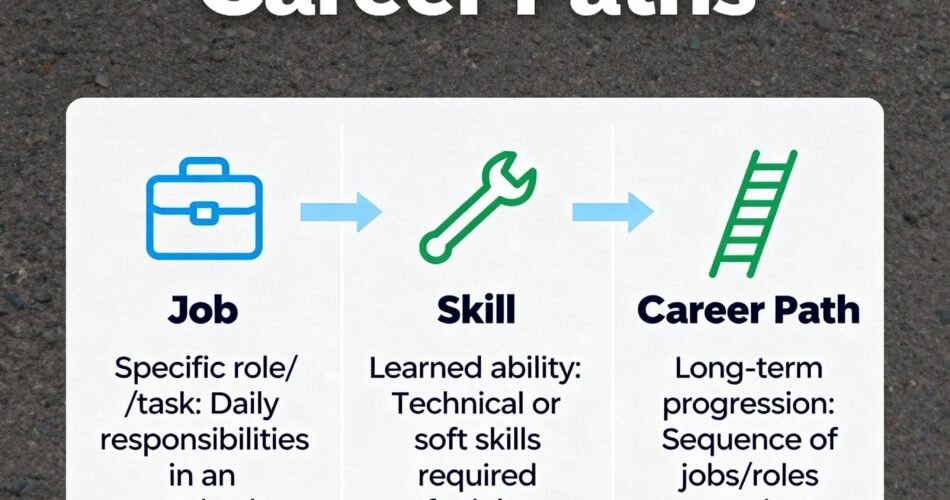
In today’s fast-paced world, we often hear people talk about jobs, skills, and careers. While these terms are commonly used, many people confuse them, thinking they mean the same thing. Understanding the difference between a job, a skill, and a career is essential for making informed decisions about your professional life, improving your employability, and planning your future growth.
This article will break down the concepts clearly, highlight their differences, and provide practical insights to help you navigate your professional journey.
What is a Job?
A job is a position of employment in which a person performs specific tasks in exchange for money, benefits, or other compensation. Jobs are often short-term or long-term depending on the role and may not always align with your long-term goals.
Key Characteristics of a Job:
-
Task-Oriented: Focused on completing specific duties or responsibilities.
-
Income Source: Primarily a way to earn money.
-
Temporary or Long-Term: Can be short-term (part-time, contract) or long-term.
-
Limited Growth: Jobs may offer limited learning opportunities unless part of a career path.
Example: A cashier at a retail store, a data entry operator, or a delivery driver.
What is a Skill?
A skill is the ability to perform a task effectively and efficiently. Skills can be learned, practiced, and improved over time. They are essential for performing a job and can also help you advance in your career.
Types of Skills:
-
Hard Skills: Technical abilities, such as coding, accounting, graphic design, or operating machinery.
-
Soft Skills: Personal attributes, such as communication, teamwork, problem-solving, and time management.
-
Transferable Skills: Skills that can be applied in multiple jobs or industries, like leadership, critical thinking, or project management.
Why Skills Matter: Skills make you employable, increase your earning potential, and allow you to take on higher responsibilities. Even if you change jobs, your skills remain valuable and relevant.
Example: Knowing how to use Excel, speak a foreign language, or write professional emails.
What is a Career?
A career is a series of connected employment opportunities that provide growth, learning, and fulfillment over time. Unlike a job, which is often about earning money in the short term, a career is about long-term professional development and achieving goals.
Key Characteristics of a Career:
-
Long-Term Growth: Focuses on advancement, skill development, and achieving milestones.
-
Purpose-Driven: Aligns with your passion, values, and professional interests.
-
Skill Utilization: Uses your existing skills while helping you develop new ones.
-
Multiple Jobs Possible: A career may include several jobs in the same industry or field.
Example: A software developer starting as a junior programmer, moving to a senior developer, then a project manager, and finally a CTO.
Main Differences Between Job, Skill, and Career
| Aspect | Job | Skill | Career |
|---|---|---|---|
| Definition | A position of work for income | Ability to perform tasks | Long-term professional journey |
| Duration | Short-term or long-term | Lifelong (can be improved) | Long-term |
| Purpose | Earn money | Enhance performance | Personal & professional growth |
| Examples | Cashier, driver, teacher | Communication, coding, writing | Software developer, entrepreneur |
| Focus | Task completion | Ability & expertise | Progression & achievement |
How Job, Skill, and Career Work Together
While different, jobs, skills, and careers are interconnected:
-
Jobs help you practice skills: Every job provides opportunities to develop or enhance your skills.
-
Skills help you excel in a career: The more skills you have, the better your chances of advancing in your career.
-
Career gives direction to your jobs and skills: By planning a career, you can choose jobs and develop skills that align with your long-term goals.
Example:
-
Job: Marketing Intern
-
Skills: Social media management, content writing, analytics
-
Career: Digital Marketing Specialist → Marketing Manager → Chief Marketing Officer
Tips to Build a Strong Career
-
Invest in Skill Development: Constantly upgrade your hard and soft skills to stay competitive.
-
Plan Your Career Path: Set short-term and long-term goals.
-
Choose Jobs Wisely: Select positions that allow skill development and align with your career goals.
-
Network: Build connections in your industry for mentorship and opportunities.
-
Stay Adaptable: Be open to learning new skills and changing roles as industries evolve.
FAQs About Job, Skill, and Career
1. Can I have a career without a job?
No. A career consists of multiple jobs or positions over time. Jobs are the stepping stones to building a successful career.
2. Can skills exist without a career?
Yes. Skills can be developed through hobbies, volunteering, online courses, or personal projects even without formal employment.
3. What is more important: a job, skill, or career?
All three are important. A job provides income, skills enhance employability, and a career gives long-term purpose and growth.
4. How do I know if a job fits my career?
Ask yourself if the job helps you develop relevant skills, provides growth opportunities, and aligns with your long-term goals.
5. Can changing jobs frequently harm my career?
Not necessarily. Strategic changes that improve skills or advance your career can be beneficial. Frequent, unplanned changes without skill growth may harm your career trajectory.
Conclusion
Understanding the difference between job, skill, and career is vital for making smarter professional decisions. While a job provides immediate income, skills empower you to perform better, and a career ensures long-term growth and fulfillment. By investing in skill development, making strategic job choices, and planning your career, you can create a successful and rewarding professional journey.
Remember, your career is a marathon, not a sprint—each job and skill you gain is a step forward toward achieving your goals.